
Individual therapy and counselling
There are times in life when thoughts, feelings, or repeating patterns in relationships begin to weigh heavily, and it becomes difficult to find clarity on your own.
Individual counselling and therapy offer a safe, non-judgemental space to pause, make sense of what is happening, and find new ways of moving forward.
When Might it help to seek support?
You may come to individual counselling or therapy with many different concerns. For example, if:
- relationships create tension or repeated misunderstandings
- you find it difficult to set boundaries
- life has brought a major change or a difficult decision
- parenthood or relationships with your own parents raise questions
- stress, anxiety, emotional pain or inner restlessness do not ease
- the same difficulties or patterns keep repeating
- you feel a need to better understand yourself or make changes in your life
Sometimes people come to gain clarity and support in a specific situation. At other times, the wish is to go deeper — to understand oneself, one’s needs, and relationships more fully.
Counselling and therapy – what is the difference?
The terms counselling and therapy are often used interchangeably, but their focus can be slightly different.
Counselling is usually shorter-term and more focused. It can be helpful when you are looking for clarity, support, or practical understanding in a specific situation, relationship, or life transition. Counselling is not about giving ready-made advice, but about exploring together what might work best for you.
Therapy is often a deeper and longer-term process. It looks not only at the immediate concern, but also at what lies beneath it — recurring patterns, earlier experiences, beliefs, and relationship dynamics. Therapy can support more lasting change, both within yourself and in how you relate to others.
Each person’s needs are different. For some, shorter-term counselling is enough; for others, a more in-depth therapeutic process is helpful. In the first meeting, we can explore together what might suit you best.
How I work
I am trained in two therapeutic approaches and work mainly within the frameworks of systemic family therapy and schema therapy. These approaches complement each other well.
The systemic perspective helps us see how relationships, roles, and family background shape how we feel and how we relate to others. Schema therapy, in turn, helps to understand deeper beliefs and emotional patterns that often develop in early relationships and experiences.
Both approaches aim to increase self-awareness and emotional maturity. They explore how a person copes with difficulties and how they stay in contact with themselves and others in challenging moments — because it is often this sense of connection that becomes disrupted and causes pain.
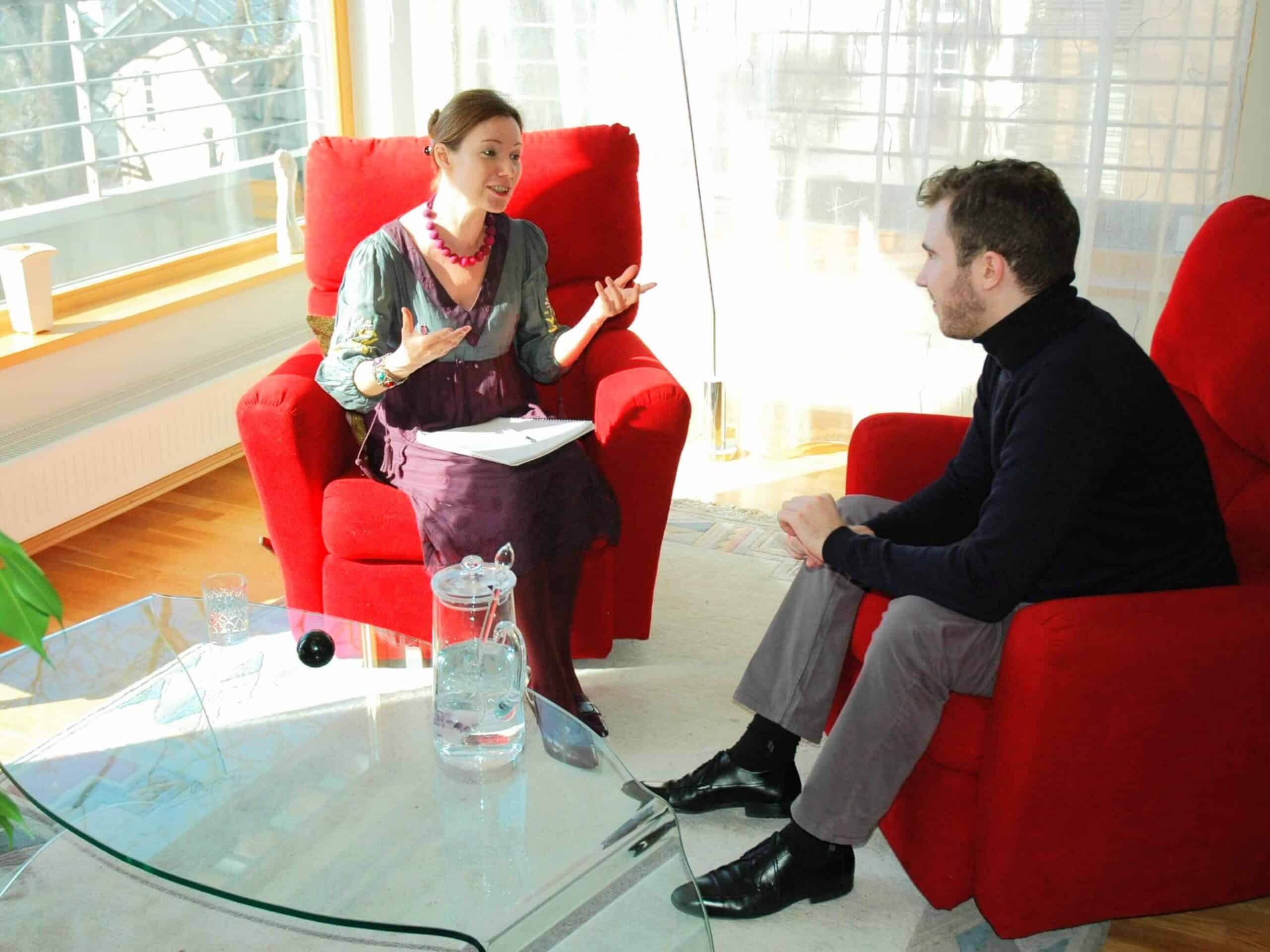
Systemic family therapy→
The tools of family therapy can also be used in individual work. A person never exists in isolation, but is always part of a system of relationships — first and foremost within their family, but also in friendships, work, and other meaningful connections.
This perspective helps us see that difficulties do not arise only “within us”, but often take shape in relationships. In family therapy, the family is seen as a system where change in one part affects the whole — and where relationships shape our experience of ourselves.
The quality of our close relationships directly influences our sense of wellbeing, as well as our mental and physical health.
This approach can be especially helpful when the focus is on relationships, family tensions, recurring roles, boundaries, or questions about how to stay in contact with your own needs.
Schema therapy→
Schema therapy helps to understand deeper beliefs and emotional patterns that often develop in childhood or adolescence. When important emotional needs are not met, lasting inner beliefs about oneself, others, or the world can take shape.
These beliefs influence how we interpret situations, what we expect from others, how we react, and the choices we make. Often, we may not be fully aware of how strongly these deeper patterns guide our lives.
Schema therapy supports recognising these patterns, understanding how they developed, and finding healthier ways of relating to yourself and others. It can be helpful, for example, in experiences of abandonment, shame, strong self-criticism, feelings of inadequacy, emotional dependency, avoidance, or difficulty recognising and expressing one’s needs.
I found schema therapy later in my own professional path and currently practise under supervision.
Individual counselling in nature

As an alternative to indoor sessions in Tallinn, I offer the possibility to combine individual counselling with a walk in nature. It is possible to talk about important matters while walking — nature supports the process in its own way.
In nature, people often settle more easily. The sounds and rhythms of the natural environment can have a calming and clearing effect. In the forest, the senses become more alert. By the sea, thoughts begin to untangle. In a bog, stress softens. Sometimes the best support is simply stepping out of the noise of everyday life.
Many clients have found that a walk during the day adds a more personal quality to therapy. It allows tension to release and gives space to gather oneself again. This format has also been especially suitable for parents with babies, who can combine a child’s nap with a session.
Walks take place in suitable locations around Tallinn or in city parks. The fee is the same as for regular sessions.
First meeting
In the first meeting, we can take time to look at what brings you here, what you need most at the moment, what kind of change you are hoping for, and whether a shorter counselling process or a deeper therapeutic approach might suit you better.
Sometimes change begins simply from not having to carry your questions, confusion, or pain alone.